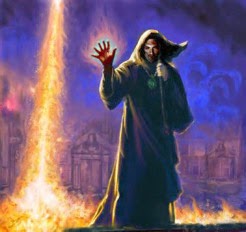
Este artículo enfoca el tema del sábado en el Apocalipsis, particularmente en la sección central de la estructura literaria (Ap 11:19-15:4), evidenciando su importancia en los episodios finales de la gran controversia entre Cristo y Satanás. Se destaca el texto de Apocalipsis 14:7, su relación con Éxodo 20:8-11, y la enemistad en contra de la ley de Dios como se percibe en Daniel 7:25 y sus paralelos en Apocalipsis 13. La conclusión es que el conflicto final entre Cristo y Satanás involucra el mandamiento del sábado y un llamado a toda la humanidad para que adore al Señor en el día designado por Él.
Mostrando entradas con la etiqueta Apocalipsis. Mostrar todas las entradas
12 nov 2015
En esta presentación, usted encontrará los elementos necesarios para identificar al anticristo. Aunque no comparto con aquella imagen donde aparece el 666 en la frente de una persona, porque literaliza la marca de la bestia, la cual es simbólica, es un buen tema.
Descargue aquí el archivo en PPT
11 nov 2015
Esta iglesia representa a un periodo triste, que inicia en el año 100 DC y culmina en el 313 DC. Algunos han llamado a este período, la etapa de la “Iglesia sufriente”. Durante estos años, la Iglesia fue fiel a Dios y cumplía a cabalidad la misión dejada por el Señor Jesús, aun en las persecuciones.
Descargue aquí el archivo en PDF
10 ago 2015
La búsqueda de la relación existente entre la segunda escena o sellos, y la tercera escena o trompetas, y la relación de estas dos escenas con la escena central del libro es un reto interpretativo en la Iglesia Adventista del Séptimo Día. Este trabajo tiene el propósito de revisar, dentro de un marco de interpretación historicista, el aporte que puede brindar el mismo libro de Apocalipsis. El estudio exegético de Ap 4:7 que contemple la actividad del cuarto “ser viviente” dentro del contexto del libro, rinde posibles relaciones de tiempo entre las escenas segunda a cuarta.
25 may 2015
Esta presentación contiene el paralelismo entre Daniel 2, 7 y Apocalipsis 17.
5 ene 2015
As I hope we will see in the following essay, the hymns carry the "story line" of the Apocalypse, and through them the work gradually moves into a crescendo and reaches a climax which becomes the proclamation of the establishment of the Kingdom of God and the enthronement of the Lamb.
15 dic 2014
Comentario exegético -texto por texto- del Libro de Apocalipsis.
1 dic 2014
Esta presentación trata sobre las siete
bienaventuranzas del Apocalipsis.
30 nov 2014
The
present study has two main purposes, and the data pertaining to each of these
will be presented in separate articles: First, the present essay analyzes.
briefly some parallel patterns in the eight major visions of the book of Revelation.
This
paper explores some of the most representative proposals with regard to the
structural organization of the last book of the Bible. These proposals should
not be viewed as mutually exclusive and determinative. Although some offer more
promising insights into the structural arrangement of Revelation than others,
the variety of proposals express a broad spectrum of the bookÕs design and
composition, and also its overall theme. When brought together, they unpack the
intention of the author of Revelation much more than otherwise possible.
29 nov 2014
En esta presentación se tratará sobre: El principio
historicista, el principio de día por año y las profecías de tiempo en Daniel y
Apocalipsis.
25 nov 2014
El autor aborda el tema del juicio en el
santuario. Para ello, analiza el registro veterotestamentario, en especial el
libro de Daniel, y luego lo presenta al juicio desde una perspectiva
escatológica.
10 nov 2014
O futuro: Visão Adventista dos Últimos Acontecimentos. Editado por Alberto Timm, Amin Rodor y Vanderlei Dorneles
Posted by Unknown | 14:07 | Apocalipsis, Apocalíptica bíblica, Daniel, Escatología bíblica, Literatura Apocalíptica
Este es un libro con las mejores ponencias del V Simposio Bíblico- Teológico Sudamericano, realizado en Brasil en 2002. La temática fue Escatología Bíblica (se encarga de estudiar los Eventos Finales).
7 nov 2014
Is Revelation to be Understood Primarily as Literal or Symbolic?
27 oct 2014
Comentario exegético del libro de Apocalipsis.
This paper reports the results of my own comprehensive
research in the book of Revelation regarding all references to Deity and the
respective roles of the members of the Trinity as revealed by these references.
18 sept 2014
El presente artículo trata del tema del “fuego que cae del cielo” en Apocalipsis 13:13, intentando encontrar bases teológicas en la Biblia y en los escritos de Elena White. La investigación presenta la relación simbólica del espiritismo con el tema propuesto, mostrando cómo Satanás intenta realizar su acto capital de engaño como tentativa de imitación de la segunda venida de Jesús.
8 sept 2014
Although Jesus as the Lamb was already presented in the second article of this series, we must return to this subject and expand on it, to further study the nature of the Lamb, the activities of the Lamb, and the people of the Lamb. In doing so we need to keep in mind that the Lamb is divine as discussed in the second section of the second article in the series. In this final part, we will try to use only those data which directly relate to the Lamb and largely avoid information that can be derived from other descriptions and titles of Jesus in Revelation. It is true that in one way or another the other designations of Jesus are indirectly connected to the Lamb, since they also point to Jesus. However, they will not be our focus. Therefore, the passages dealing with the nature, the ministry, and the people of the Lamb do not reflect a complete Christology of Revelation, but provide a Lamb Christology of the book.
10 jun 2014
El Espíritu Santo
en Apocalipsis
Ángel Manuel Rodríguez
Ex Director del Biblical Research Institute
He
escuchado algunas preguntas sobre la persona del Espíritu Santo en el
Apocalipsis. ¿Es considerado un miembro de la Trinidad en ese libro?
El
Espíritu juega un papel significativo en el libro de Apocalipsis. En efecto, el
libro comienza y termina con referencias al Espíritu (Apoc. 1:4; 22:17). Para
algunos, sin embargo, que el Espíritu no aparezca en el trono con el Padre y el
Hijo significa que no es una persona, y mucho menos un integrante de la
Trinidad. Analicemos las evidencias.
Suscribirse a:
Comentarios (Atom)